
Insurance: CX Design Strategy – case study
Summary
When our Wealth team expanded to include Insurance, there was a series of in-flight projects across 5 key products and an explosion of rapid delivery.
Whilst design work was happening, it was not robust and proper UX / CX was close to impossible due to subpar processes, team culture/habits and a lack of understanding/appreciation of design/UX.
Not only was this impacting customers through the experiences being delivered, it was also taking its toll on the designers involved (now my team).
I convinced our product owners and Head of Wealth & Insurance to sponsor a 3 day CX workshop in Hong Kong to tackle these issues and kick start us down the right path
Achievements:
- Design evangelism / influence
substantially improved the product team’s belief in and respect for good research/UX processes, with far better working conditions for the designers as a result
- Vision & Principles
focussed the team on an agreed vision with a set of principles to guide all Insurance products
- Progress with pragmatism
short, medium and long term actions identified and prioritised to close the gap between today and where we want to be
- Customer Empathy
embedded empathy into the teams approach and kick started experience mapping across each product
This was huge progress for our design team and had lasting impact on the ways of working across our Insurance teams & pods.
Which insurance products were priorities?
At this time, 5 core products +many new ones on the roadmap
- Life Insurance (UK/France)
- Medical Insurance (HK +others)
- Travel Insurance (HK +others)
- Endowment (HK)
- Home Insurance (HK, UK)
My role
Global Lead UX Designer & Design Manager across Wealth & Insurance products
BREAKING
SILOS
Problems
Context
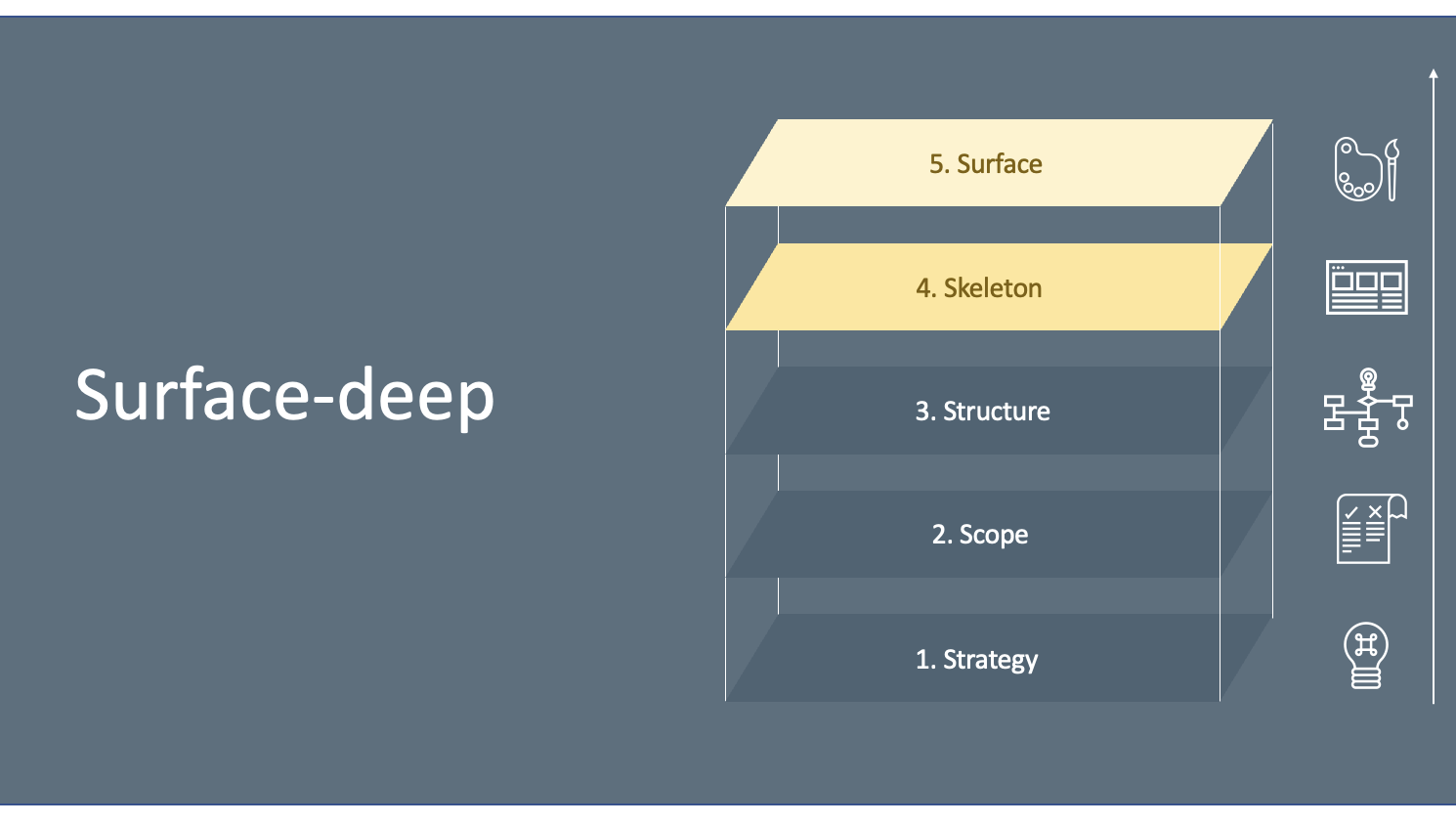
Siloed, surface-deep & ‘scatter-gun’
Our Insurance product team were hyper-focussed on rapid delivery, after expanding rapidly but having evolved without enough focus on customer experience – There were roadmaps and product features to deliver but without enough UX/CX rigour or any coherent vision/direction for the customer experience.
Our biggest issues:
For Customers
Disparate experiences
When Insurance came under our Wealth & Insurance wing, the experiences across different insurance products were disparate. A siloed product mindset inevitably had led to inconsistent experiences and unmanaged / unmet customer expectations.
Lacking empathy & understanding
Experiences were not optimal, having not been approached from a place of customer empathy. Some research and testing had taken place for some of the products but this seemed more ‘shooting fish in a barrel’ approach – nothing consistent or coherent. Decisions / priorities were being driven by:
- What would be new and innovative, to differentiate / stand out?
- What do we need to do to better match competitors?
- …not enough customer focus or empathy
For Designers
Process & morale
The designer role was in effect being treated like a ‘bolt-on service’ rather than an integral part of the process.
- Designer involvement started too late
- Demands were unrealistic and often unreasonable (fatigue & morale issue)
- The level of sharing/syncing up amongst designers across products, was low
- Ultimately designers were not afforded the time to carry out design best practice
For Product Owners & stakeholders
Silos
Demands from the business stakeholders and product teams were aggressive but ultimately without cohesive customer experience in mind.
- PO’s focussed on their own individual product delivery with no ownership or enough care for the broad customer experience.
- PO’s wanted efficiency across design work for the suite of products but were expecting the individual designers to ‘sort this out’
Examples of the poor experience
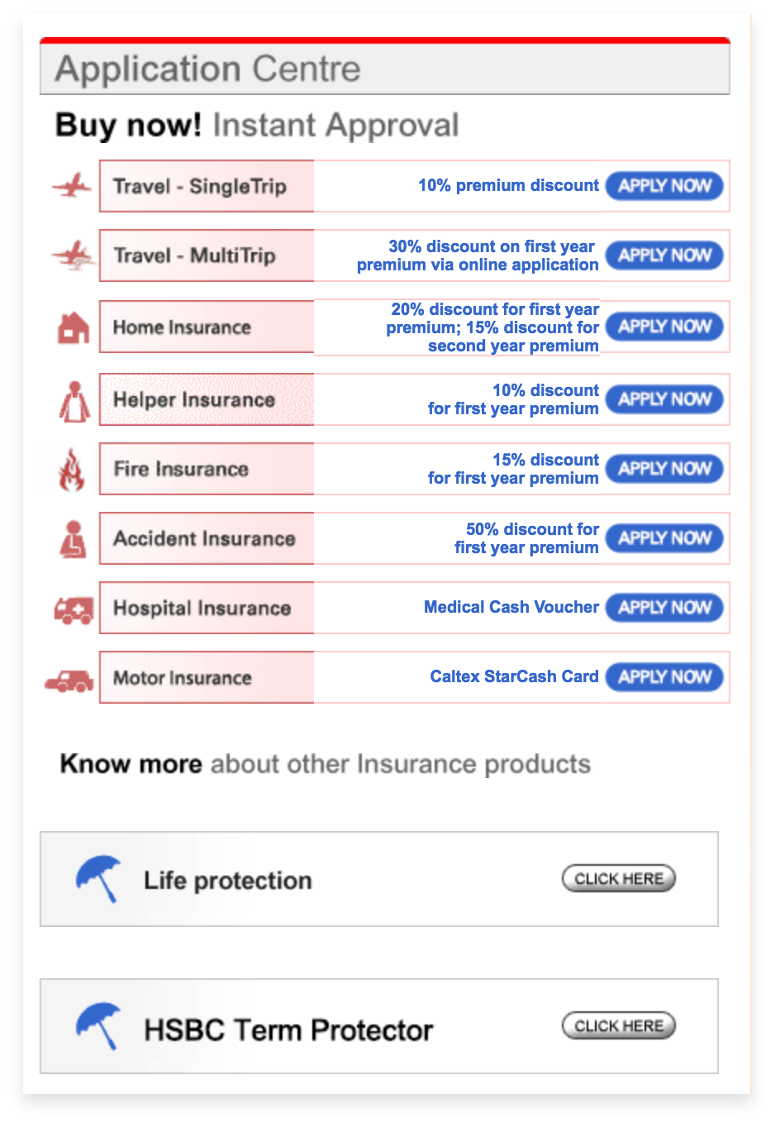
What should I choose if I want coverage over my home including fire damage?
What should I choose if I want to be insured for hospital bills, including accidents locally and when I am travelling abroad?
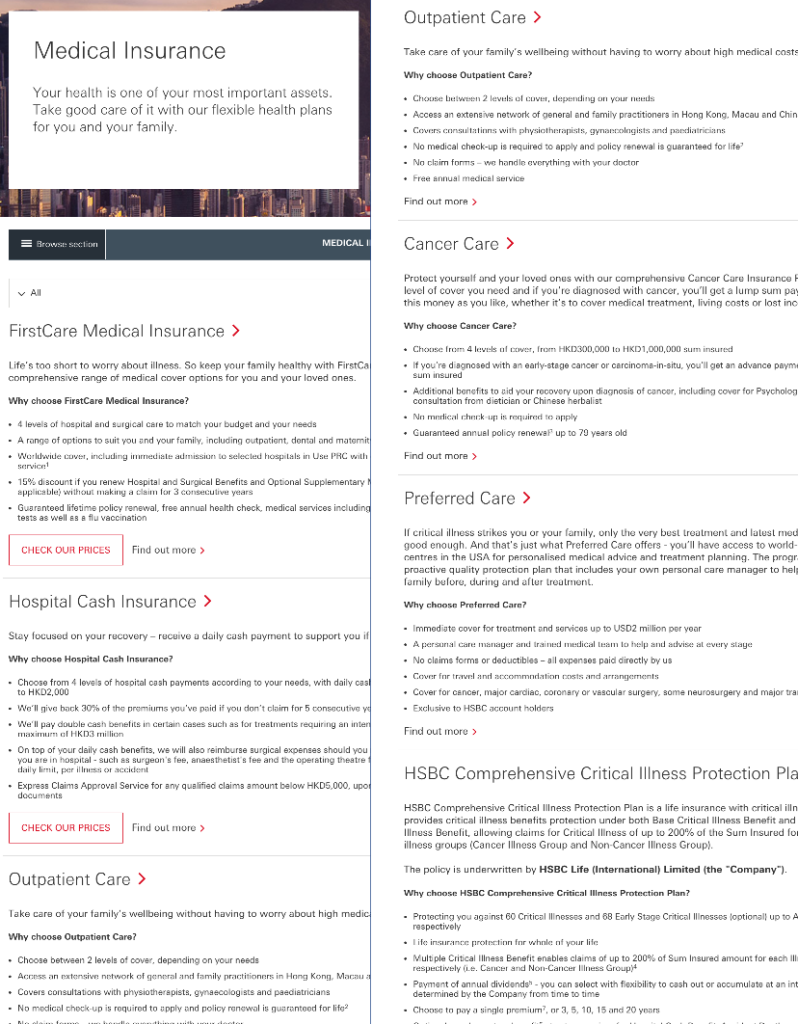
For medical insurance, what am I to choose here?
My approach
Goals:
Work towards a coherent customer experience
- Experiences we design need to feel familiar and part of the same bank
- Customer expectations must be met and/or managed
Change product mindset & embed best practice
- Improve how product teams use and value UX research (time & process)
- Increase empathy with our customers, right through the whole team / process
Bringing everyone together
To bring all products together, we first needed the teams to be on the same page and pushing towards the same thing, albeit within their individual product designs
This process had the potential to naturally hit resistance due to it’s nature: inevitably we would be airing and laying bare the inconsistencies, issues with the prior or in-flight work and potentially prior product decisions and strategy.
This needed careful handling but ultimately needed us all to be brought together as one team – something that hadn’t happened so far across this collection of products/services.
Convincing & Influencing
- CX / design evangelism across the Insurance team
- Budget and time needed…
Planning
After securing 3 days in all the right diaries, the logistics could be put in place
- Location: Hong Kong (majority of team there, rest fly over)
- Duration: 3 days
- Attendance from: all Insurance PO’s, Designers, Analysts, + Lead dev (partial)
This needed to be engaging and productive for the whole team and set us all on the right path to move forward after the workshop – a lasting impact is what I ultimately wanted from this.
Prep:
- Designers: Review each Insurance journey, be ready to demo existing experience designs, existing customer insight/research summary
- Analysts: stats/analytics from live journeys and target customer profiling + summary of issues and blockers to be aware of.
- PO’s: Slide deck: product synopsis, some background, business targets and issues
How I did this
The workshop
3 day agenda…
| Day | Activities | Output |
|---|---|---|
| 1 | OUR CX TODAY – Better understand each others products – Empathise, Problems & opportunities | – Empathy maps – Experience maps: ‘as is’ |
| 2 | DEFINING THE CX VISION – Develop & agree on collective vision – Using principles, revisit experience map for each product (+ Consider cross product problems/opportunities) | – CX Vision & Principles – Experience maps: ‘to be’ |
| 3 | PRAGMATISM: Steps toward the vision – Closing the gaps between today’s experience and our newly defined aspiration | – Prioritised actions: short, medium & long term |

DAY 1
Synthesis: getting all on the same page
Summary of customer research & insight
UX Designer / PO ran through the salient customer research & insight we have so far and how this was captured.
Understanding each product
Product presentations were given by each PO (the deck was a pre-workshop requirement) to make sure we all appreciate where things are at with the product currently and the important parts of the product offering.
Empathy mapping
The persona exercise was useful to get everyone thinking as our customers and empathising with their emotions / thoughts and feelings. This would then be used / taken into the Experience mapping exercise.

Customer research and user testing was at different stages and states across each of the products. The time and space to conduct new/additional research first was not a luxury we had, so I tackled this pragmatically. Where we had insight, we used it – where we didn’t, these points were proto-persona and marked for validation. Actions, including points to validate, were all captured and prioritised by the group (day 3).
Customer Experience Mapping 1: ‘as is’
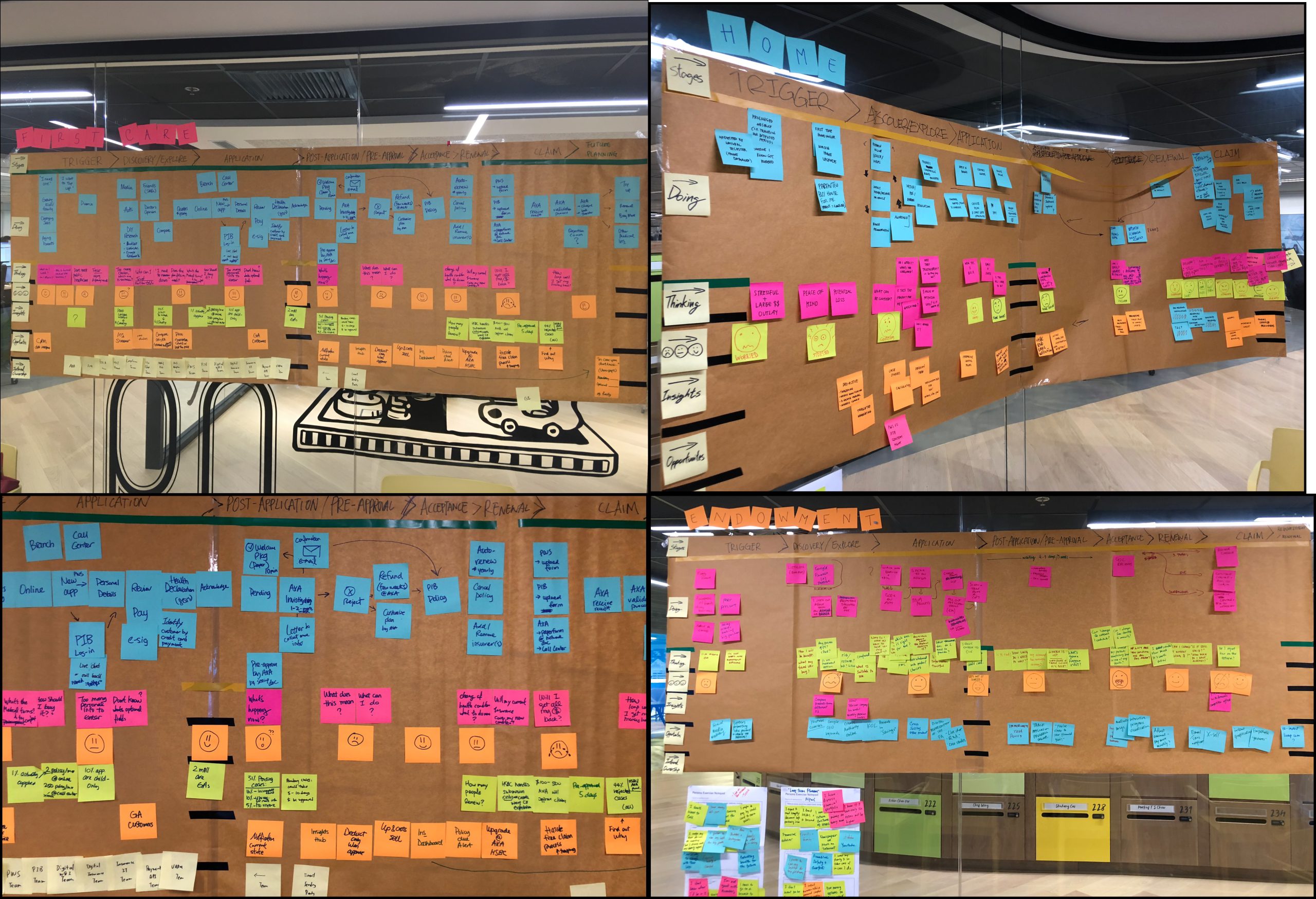
4 of the 5 experience maps, drawing out customer emotions, pain points and opportunities throughout each Insurance product.
DAY 2
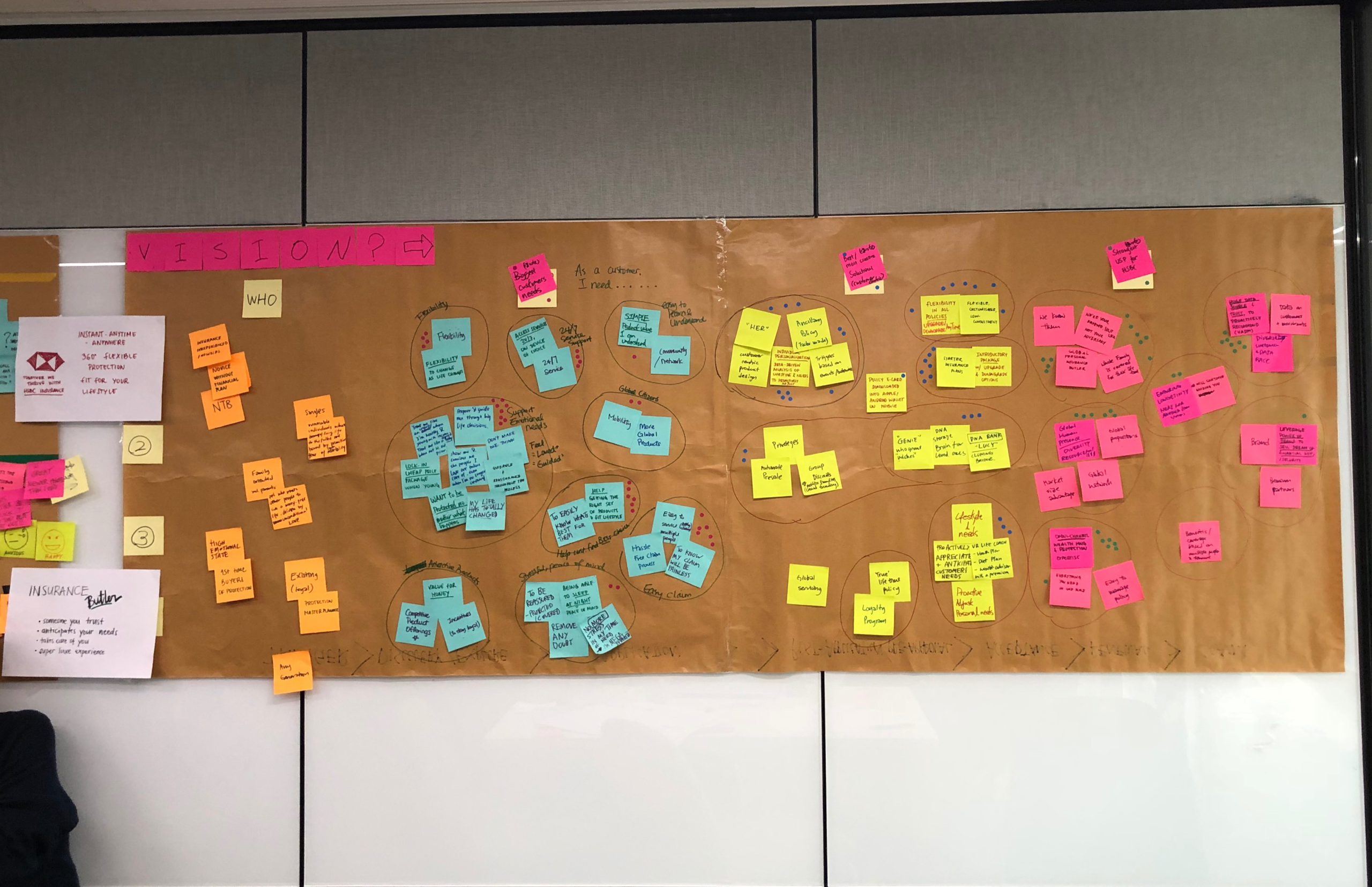
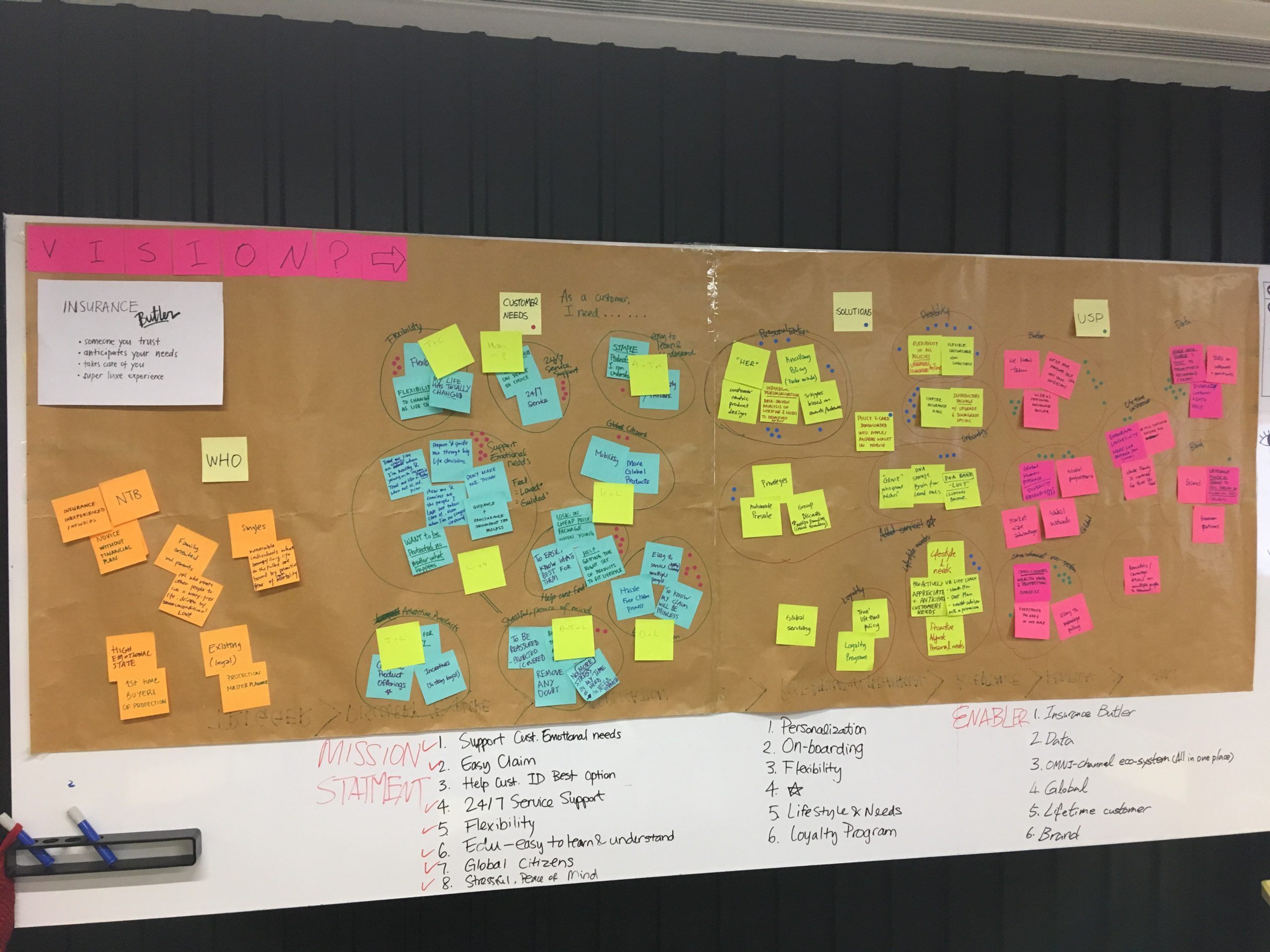
Vision Boards
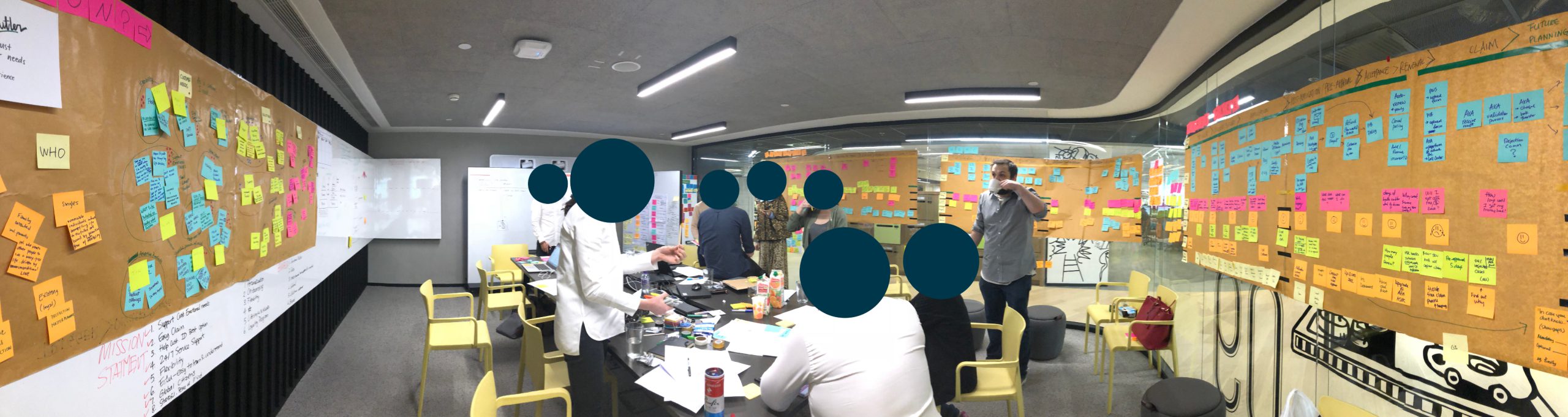
This vision board exercise generated a lot of thoughts & ideas about how we would like to see our customers experience Insurance products

Grouping & Voting
We were able to identify natural groupings together and ran some dot voting exercises to help prioritise the most important to focus on
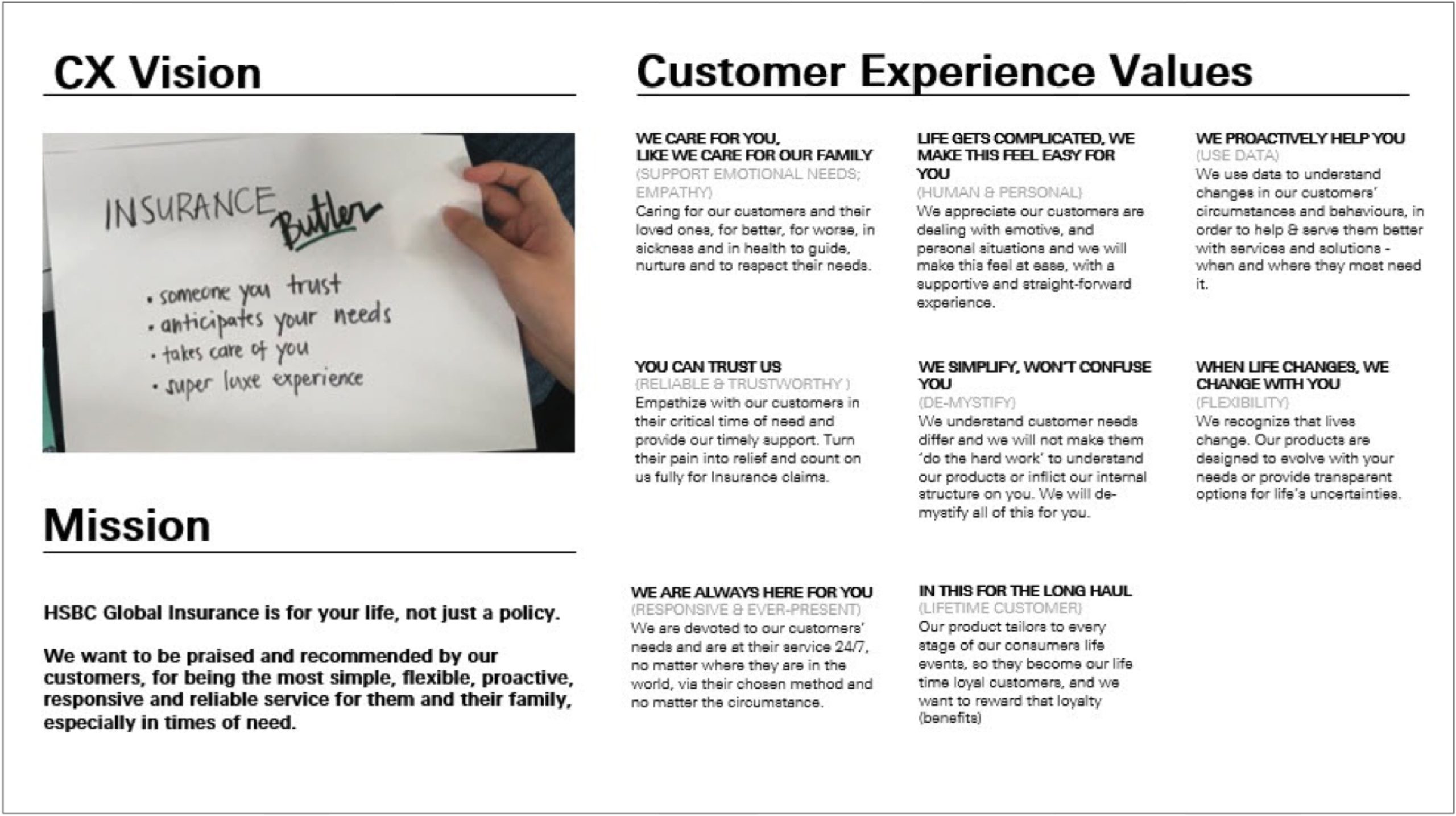
Mission & CX Values
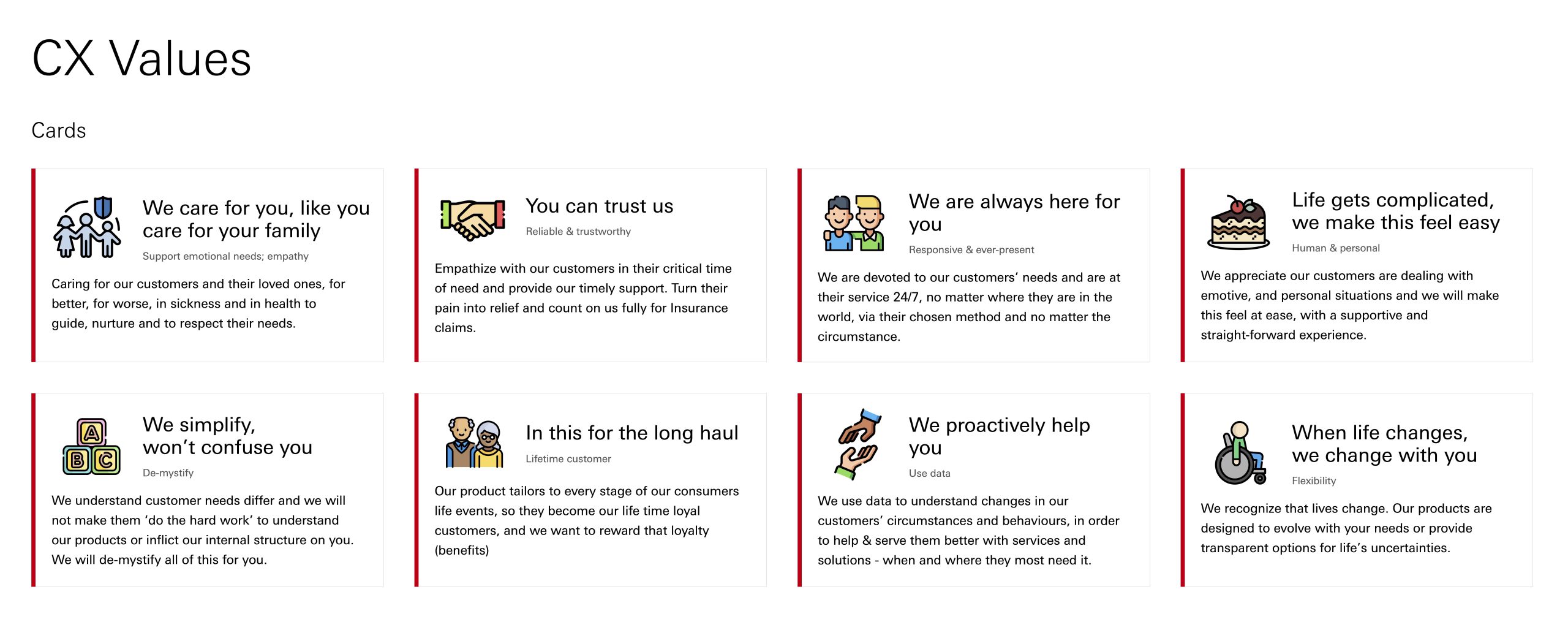
Customer Experience Mapping 2: vision
Using the findings from day 1 (current) empathy & experience maps and with our new principles and unified vision in mind – we revisited and revised the experience mapping exercise toward the future vision.
DAY 3
A pragmatic path forward: categorise & prioritise
We know we can’t jump straight to a gold standard from where we are now – this needs to be a pragmatic approach where we tackle what’s realistic in the short to medium term and target the longer term issues. This will all integrate into backlogs for prioritisation and roadmaps.

What actions can we set, to tackle problems & opportunities
We ran group exercises to use the experience & empathy maps to draw out actions and blockers across all products.
Naturally, the issues and actions were very broad ranging – as I’d expected, since we’re not focussing on a specific discipline here but instead purely on the customer.
The types of actions and blockers ranged from:
- further validation via user research…
- to UX/UI and content changes…
- to larger problems with the product features or processes.
Short, Medium and Long…
We categorised and grouped into:
- Tactical: short term
- Strategic: medium term
- Vision: long term

The Impact
The lasting impact of this workshop was actually huge for the team and a big win for our design team:
1. Morale & working relationships
The biggest benefit was the closer working relationship between design, PO and cross functional teams.
The value of our Design team being engaged in product decisions and direction, had been clearly demonstrated – and was now valued more highly
Going forward we (design) were engaged and needed much earlier in product discussions and PO processes – this alleviate a lot of the concerns/tensions and ultimately morale issues that had surfaced within the different pods.
2. Design process & rigour
Better processes helped the teams achieve better delivery.
- User validation where it was needed, became our default approach
- The customer experience maps were continually & regularly used
- The short, medium & long term actions we set & agreed were assigned to individuals with commitment to execute. I followed up on this periodically to make sure it remained top-of-mind and managed via backlog.
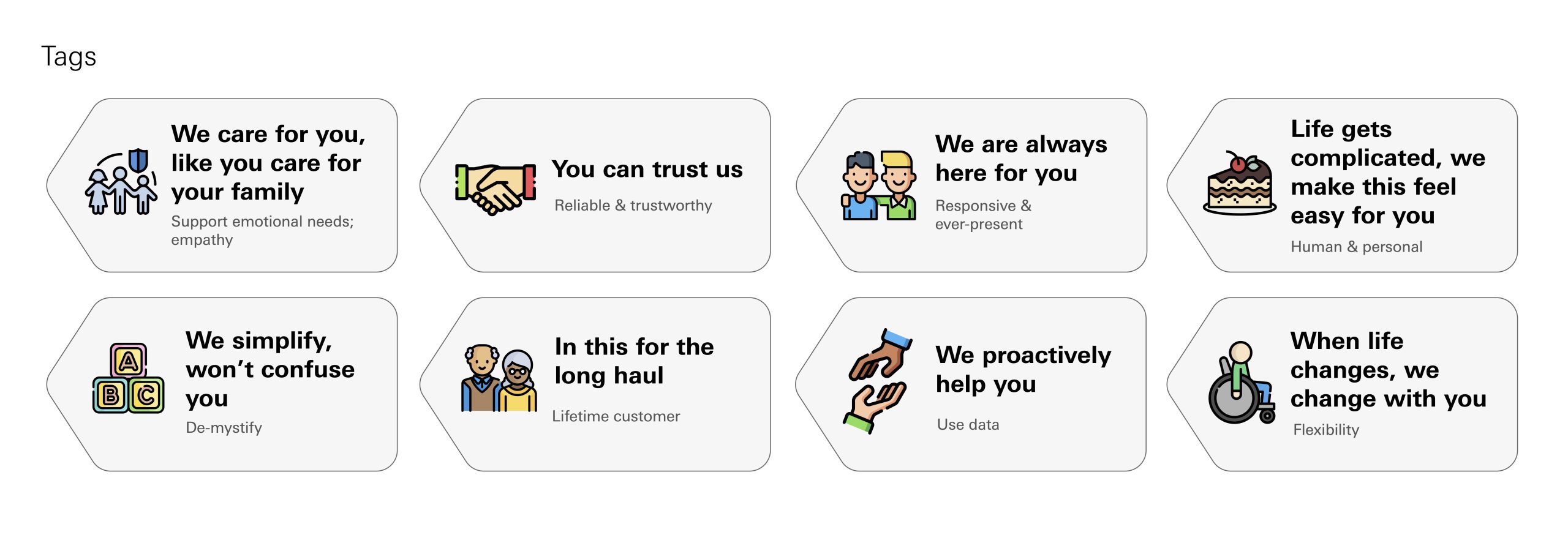
CX Values actively used & socialised across docs
Tags (labels) were used across our design documentation (and others), to socialise our CX values, further justify design decisions and keep us honest and working toward our new Insurance experience vision.
3. Experiences improved
Each of the experiences – you could see this as a more natural working relationship transpired across the pods. This was something I also helped to ensure happened with cross-pod design focussed sessions to make sure each of our designers were actively sharing design progress, actions, latest work and blockers.
Design work began to align more tightly across each of the insurance products.
Measures
We measured our success over time by tracking metrics such as funnel/drop out & conversion rates across all products vs benchmarks prior to this workshop.
In addition we introduced some behavioural UX metrics where they were not in place already, to gradually improve our benchmarking and measures across these products over time:
- Error rates
- Time on task
No longer just about ‘making a sale’
The Claims experience – this was prioritised and taken up directly with AXA to improve the integration and their processes. Whilst this was a long term and significant change, the fact it was identified as a major problem, prioritised to tackle and actively negotiated / pushed with AXA was a big achievement for us.
A more cohesive & consistent feel
Consistency increased over time across each of the products – the easier alignment was the UI layer, using one design system and applying it in the same, coherent way to the insurance products.
Sensible steps: I helped steer our PO’s toward prioritising the remaining budget for a new insurance DASHBOARD experience. This naturally allowed us to focus on customers who use multiple insurance products, rather than ‘FirstCare’ customers, Travel Insurance customers …etc. This was sensible in helping our PO’s and stakeholders continue looking at customers more holistically rather than individual products .
The products themselves were not designed & packaged with a customer in mind…
As a result, the old experience was more of a list of Individual competing products rather than one experience designed around customers and their needs.